
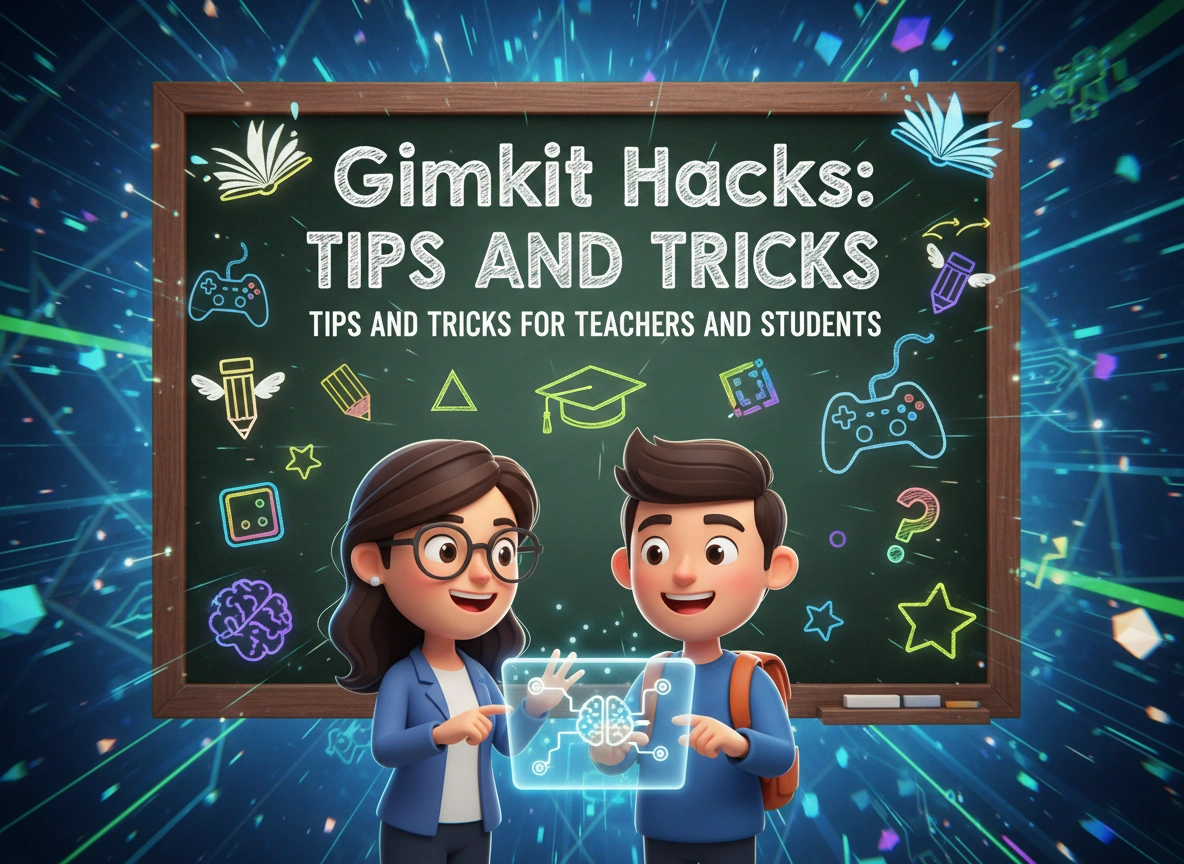
Game-based learning platforms have transformed the modern classroom, turning rote memorization into high-stakes competition. Among these, Gimkit stands out as a favorite. Created by students for students, it blends traditional quiz mechanics with strategy elements like currency management, power-ups, and team collaboration.
For many users, simply playing the game isn’t enough. They want to master it. Whether you are a teacher looking to boost engagement or a student aiming for the top of the leaderboard, understanding the deeper mechanics of the platform can significantly improve your experience.
This article explores the best “hacks”—not illicit cheats, but strategic tips and clever workarounds—that help both educators and learners get the most out of Gimkit. We will cover how teachers can customize games for maximum learning impact and how students can use legitimate strategies to dominate the competition.
Ethical Considerations: What We Mean by “Hacks”
Before diving into specific strategies, we must address the elephant in the room. In the world of online gaming, the word “hack” often implies cheating, using scripts, or exploiting code to gain an unfair advantage.
Let’s be clear: using unauthorized scripts or bots to manipulate Gimkit is unethical and often results in bans or restricted access. It ruins the learning experience for everyone involved. When we discuss “Gimkit hacks” in this guide, we refer to:
- Strategic Mastery: Understanding game mechanics better than your opponents.
- Feature Optimization: Using settings and tools in creative ways.
- Workflow Shortcuts: Saving time and effort in game creation and participation.
True mastery comes from skill and knowledge, not from breaking the rules.
Gimkit Hacks for Teachers: Maximizing Engagement
Teachers often struggle to keep every student engaged during a review session. Some students answer quickly, while others lag behind. Gimkit’s unique economy system solves this, but only if you set the stage correctly. Here are pro tips for educators.
1. The “Assignments” Hack for Asynchronous Learning
Many teachers only use Gimkit for live, in-class games. However, the “Assignments” feature is a powerful tool for homework or independent study.
The Hack: Instead of assigning a simple deadline, use the “Target Cash” goal setting.
By setting a high cash goal rather than a time limit, you ensure students answer questions repeatedly until they master the content. They cannot simply wait out a timer; they must engage with the material to finish the assignment.
2. KitCollab: Let Students Do the Work
Creating question sets from scratch is time-consuming. The “KitCollab” mode is an underutilized feature that turns question creation into part of the game.
The Strategy:
- Start a KitCollab mode.
- Each student submits one question related to the topic.
- You approve or reject them in real-time.
- Once the set is built, you play the game immediately.
This “hack” saves you prep time and forces students to think critically about the material before the game even starts.
3. Customizing the Shop to Level the Playing Field
In standard modes, students who answer fastest often snowball their lead, buying upgrades that make them unbeatable. This can discourage slower readers or students who need more processing time.
The Fix: Customize the shop settings before launching the game.
- Disable “Streaks”: This prevents the runaway leader effect where one student gets exponentially more money.
- Increase Starting Cash: Give everyone a buffer so they can buy basic upgrades immediately.
- Turn off “Icer”: The “Icer” power-up freezes opponents and can cause frustration. Disabling it focuses the game on answering questions rather than attacking peers.
4. Import from Quizlet and Spreadsheets
You do not need to type out every question manually. If you already have sets on Quizlet or a CSV file, Gimkit offers a seamless import feature.
The Workflow:
- Go to your Quizlet set.
- Click the three dots and select “Export.”
- Copy the text.
- In Gimkit, select “Create New Kit” and choose “Import from Flashcards.”
- Paste the text.
This turns a 30-minute prep session into a 30-second task.
5. Using “Trust No One” for Critical Thinking
Among Us sparked a massive interest in social deduction games. Gimkit’s “Trust No One” mode mimics this gameplay.
The Educational Angle: While it looks like just a game, this mode requires students to investigate and discuss. Use this for topics that require debate or identification of misconceptions. It shifts the focus from speed to observation and communication.
Gimkit Hacks for Students: Dominate the Leaderboard
If you are a student, you know the frustration of answering correctly but still losing to someone who manages their money better. Gimkit is 50% knowledge and 50% economy management. Here is how to win without cheating.
1. The “Upgrade Early” Strategy
Most beginners hoard their money to buy expensive power-ups later. This is a mistake. The key to Gimkit is compound interest—making your money work for you as fast as possible.
The Strategy:
- Level 1-3: Spend every dollar you earn immediately on “Money Per Question” upgrades. Do not save up.
- Mid-Game: Once your income per question is decent, switch focus to the “Multiplier.” This multiplies the base value you just upgraded.
- Late Game: Only buy “Insurance” or power-ups once your income engine is fully built.
By reinvesting early, your income grows exponentially compared to players who save their cash.
2. Streak Management is Crucial
Your streak bonus is often more valuable than the base money for the question. One wrong answer resets this bonus to zero, which can be devastating.
The Tip: If you are unsure of an answer, it is sometimes better to take an extra few seconds to look it up (if allowed) or think it through rather than guessing quickly. Slow and steady maintains the streak; fast and reckless destroys it.
3. Power-Up Timing
Power-ups like the “Deflector” or “Mini-Bonus” are not just for fun; they are tactical tools.
- Deflector: Buy this before you reach first place. Once you hit the top of the leaderboard, everyone will target you with “Icers” or “Subtractors.” Having a deflector ready protects your lead.
- Blur/Reducer: Use these on the player in second place, not the player in last place. Your goal is to widen the gap between you and your closest competitor.
4. Know the Keyboard Shortcuts
Speed matters. Moving your mouse to click answers takes milliseconds longer than pressing a key.
The Hack: Use your keyboard numbers (1, 2, 3, 4) or arrow keys to select answers. Over the course of a 10-minute game, these milliseconds add up, giving you dozens of extra opportunities to answer questions.
5. The “Clapback” Strategy
If you are playing in a mode where players can subtract money from you, do not get mad—get strategic.
If someone targets you, do not immediately retaliate. Retaliation takes focus away from answering questions, which slows down your income. Instead, focus entirely on your economy upgrades. Once you are generating 10x the income of your attacker, you can buy a massive “Subtractor” and wipe them out in a single move. Financial superiority wins wars in Gimkit.
Advanced Game Modes: Specific Tips
Different Gimkit modes require different “hacks” or strategies.
Floor is Lava
In this cooperative mode, the team must keep the construction above the rising lava.
- Tip: Do not have everyone build at once. Designate “Bankers” who focus solely on upgrading their money generation and “Builders” who spend the money. Specialized roles are more efficient than everyone trying to do everything.
Humans vs. Zombies
- Tip for Humans: Stick together. Focus on repairs rather than just sabotage.
- Tip for Zombies: Coordinate attacks. If three zombies attack one human’s health bar simultaneously, the human cannot repair fast enough to survive.
Tag Mode
- Tip: Energy management is key. Don’t sprint constantly. Save your energy for short bursts when you are actively chasing someone or running away. Buying energy upgrades is often more important than speed upgrades early on.
Conclusion
Gimkit is more than just a flashy quiz tool; it is a complex engine for engagement and strategy. For teachers, the “hacks” involve creative game settings, smart import tools, and leveraging student-generated content to reduce workload. For students, success comes from understanding the economic mechanics of the game—investing early, protecting streaks, and using power-ups tactically.
By moving beyond the basic “start game” button and exploring these deeper strategies, both educators and students can transform a simple classroom activity into a dynamic, high-energy learning experience. Whether you are assigning the homework or fighting for the top spot on the leaderboard, remember: strategy beats speed, and knowledge pays the best interest.
Please click here for more info.
